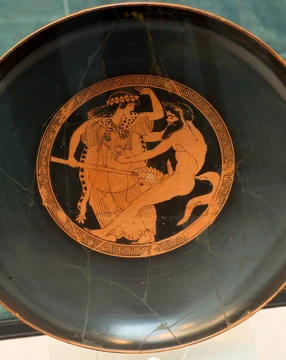
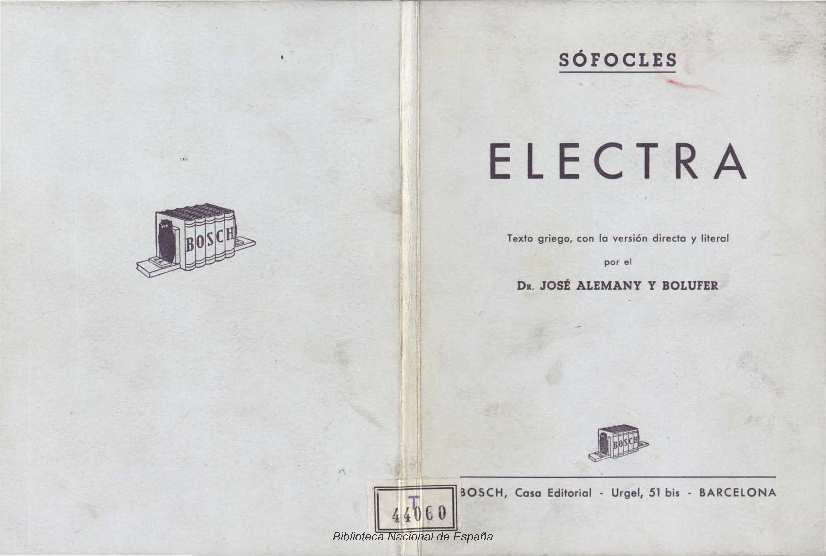
Electra (Sophocles play)
Sophoclean tragedy of a daughter's grief and revenge.

Blau-Barcelona · CC BY-SA 4.0
The play dramatizes the revenge of Electra and her brother Orestes against their mother Clytemnestra and stepfather Aegisthus for the murder of their father Agamemnon.
- Author
- Sophocles
- Genre
- Greek tragedy
- Setting
- Mycenae, a few years after the Trojan War
- Main characters
- Electra, Orestes, Clytemnestra, Aegisthus, Chrysothemis, tutor, chorus
Lore & Background
The play is set in Mycenae a few years after the Trojan War. King Agamemnon had sacrificed his daughter Iphigenia to Artemis for favorable winds, and upon his return was killed by his wife Clytemnestra and her lover Aegisthus. Electra, a younger daughter, mourns her father while her brother Orestes was rescued as a child by the old tutor, who took him to Strophius of Phocis. Years later, Orestes returns as a grown man with his friend Pylades and the tutor to exact revenge and claim the throne. They devise a plan: the tutor will announce Orestes' death in a chariot race, and Orestes will arrive with an urn supposedly containing his ashes. Meanwhile, Electra continues to mourn Agamemnon publicly, holding Clytemnestra responsible. Her sister Chrysothemis urges her to forgive their mother to avoid imprisonment, but Electra refuses. Clytemnestra argues that the murder was justified because of Iphigenia's sacrifice, but Electra remains unforgiving. When the tutor announces Orestes' death, Electra's grief deepens, while Clytemnestra becomes calmer. Orestes arrives with the urn, and Electra delivers a lament over it, not recognizing him. He reveals his identity, and they nearly expose the plot. The tutor urges them on. Electra joins the plan, watches for Aegisthus, and Orestes kills Clytemnestra alone (Pylades is present but does not participate). When Aegisthus returns, Electra leads him to Clytemnestra's room, where Orestes presents the corpse under a sheet as Orestes' body. Aegisthus lifts the veil, discovers the truth, and is escorted offstage to be killed at the hearth where Agamemnon was slain. The play ends before his death is announced, with the chorus declaring the siblings successful.
Reader's Guide
The play is noted for its focus on Electra's character, who dominates the stage with her grief and resolve. Roman writer Cicero considered it a masterpiece, and modern scholars often highlight the dichotomy between Electra and other characters as a common Sophoclean trope. In The Reader's Encyclopedia of World Drama, John Gassner and Edward Quinn argue that the delayed recognition between brother and sister produces brilliant scenes displaying Electra's heroic resolution. Edith Hall described Electra as 'driven by deprivation and cruelty into near-psychotic extremes of behavior,' noting that no other Sophoclean character dominates the stage to such an extent. L.A. Post observed that the play is 'unique among Greek tragedies for its emphasis on action.' The work continues to be studied for its dramatic structure and character portrayal.
Did You Know?
- The story of Orestes' revenge was also told in the lost epic poem Nostoi and is referenced in Homer's Odyssey, not the Iliad.
- The chorus in Electra consists of Mycenaean women who are sympathetic to Electra but do not play a role in persuading her to go along with the plan.
Dating and Place in Sophocles' Oeuvre
The precise date of composition for Sophocles' Electra remains uncertain, as no definitive publication record survives from antiquity. What scholars can rely on are the stylistic fingerprints the play shares with two other late works: Philoctetes, produced in 409 BC, and Oedipus at Colonus, staged in 406 BC. The convergence of dramatic techniques and thematic concerns across these three pieces has led the academic consensus to place Electra firmly in the final phase of Sophocles' creative life. The nineteenth-century classicist Richard Claverhouse Jebb narrowed the window further, arguing for a composition date somewhere between 420 BC and 414 BC. This late-career positioning matters because it situates the play alongside Sophocles' most experimentally mature tragedies, suggesting a poet who was still refining his approach to family conflict, moral ambiguity, and the mechanics of dramatic irony. The absence of a fixed date, however, means that Electra occupies a slightly fluid position in the chronology of the dramatist's output, inviting ongoing scholarly debate about exactly where it fits among his surviving corpus.
The Urn Deception and the Architecture of Revenge
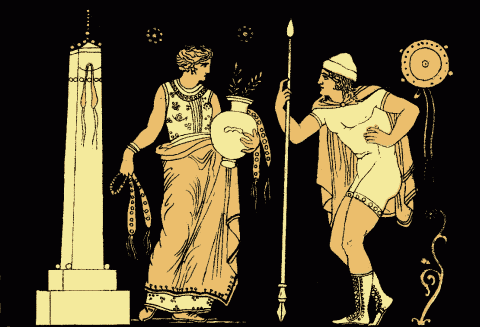
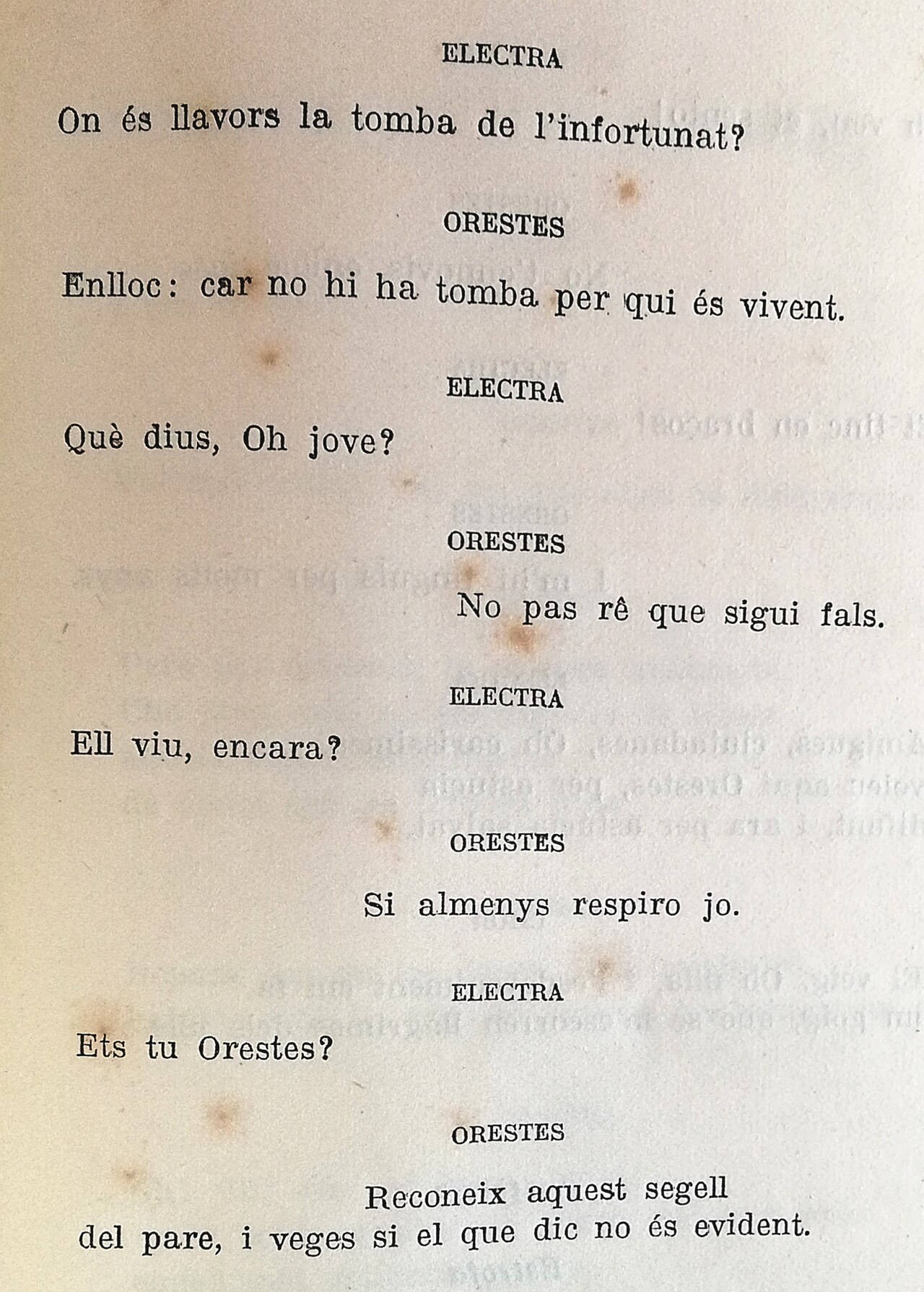
The central engine of the drama is an elaborate ruse built around a false death. Orestes arrives in Mycenae with his friend Pylades and an elderly tutor who once spirited the boy away to Strophius of Phocis after Agamemnon's murder. The scheme is deceptively simple: the tutor announces publicly that Orestes perished in a chariot race, and two men will shortly arrive bearing an urn of his supposed ashes. Electra, who has spent years in open mourning for her father, becomes the emotional focal point of the deception. When Orestes appears carrying the urn, neither he nor his sister recognizes the other. She delivers a raw lament over what she believes is his remains while he stands alive beside her. The moment of mutual recognition is nearly blown when both siblings exclaim their joy too loudly, and it is the tutor who reappears to steer them back on track. Electra then takes her assigned role: holding Aegisthus in conversation while Orestes and Pylades enter the house and kill Clytemnestra. Aegisthus is lured to the chamber, lifts a sheet to find his lover's corpse, and is escorted offstage to meet his death at the hearth—the very spot where Agamemnon fell.
Moral Fault Lines: Electra, Chrysothemis, and Clytemnestra
The play's deepest tension is not the revenge plot itself but the web of competing moral claims that surround it. Electra and her sister Chrysothemis embody two irreconcilable responses to their father's murder. Electra refuses to let the grief fade, publicly lamenting Agamemnon's death and holding Clytemnestra fully accountable. Chrysothemis, by contrast, urges her to suppress her anger, arguing that the sisters have no power to change what has already happened and that continuing to grieve risks their safety. She even warns that if their stepfather returns and finds Electra still mourning, she will face lifelong imprisonment. Clytemnestra herself enters to articulate her own justification: Agamemnon sacrificed their daughter Iphigenia to appease Artemis, and in her view the killing of her husband was a necessary retribution for that betrayal. Electra's rebuttal is pointed—regardless of whether the original sacrifice was justified, the act of murder is what she cannot forgive. The chorus of Mycenae women, who orbit Electra throughout, plays a crucial role in reinforcing her resolve and ultimately persuading her to commit to the killing plan.
Structure, the Chorus, and an Unfinished Curtain
Sophocles sets the action in Mycenae in the years following the Trojan War, a temporal gap that allows the audience to enter a household already scarred by violence. The chorus of Mycenae women is not merely decorative; it functions as a diagetic musical presence that both the audience and the on-stage characters can hear and respond to, creating a layered auditory space. Their most significant dramatic contribution is psychological: they are integral to convincing Electra to commit to the murder plan, serving as a collective voice that validates her anger and her sense of duty. The play's conclusion is notably restrained. Aegisthus is led offstage to be killed at the hearth, the same location where Agamemnon was originally slain, yet the audience never hears confirmation of his death. Instead, the chorus addresses the siblings directly, affirming that their mission is complete and that their father's name has been restored to honor. This deliberate withholding of the final blow leaves the violence just beyond the frame, letting the audience's imagination complete the act while the dramatic focus remains on the siblings' vindication rather than on spectacle.
Gallery
Frequently Asked Questions
What is the main conflict in Sophocles' Electra?
The central tension is the slow build toward Electra and her brother Orestes killing their mother Clytemnestra and her co-conspirator Aegisthus to avenge Agamemnon's murder. Much of the drama comes from Electra's bitter taunting of her mother and her strained relationship with her younger sister Chrysothemis while they wait for the moment of retribution.
How does Sophocles' Electra end?
Orestes and Electra carry out the double murder of Clytemnestra and Aegisthus, fulfilling the vengeance owed to their dead father. The play closes with the siblings standing over the body of their mother, the act of revenge complete.
Why is Sophocles' Electra considered important in Greek drama?
It is a rare surviving tragedy that places a woman's sustained emotional and moral struggle at the heart of the action instead of a male hero's public deeds. As a late-career work, it also showcases Sophocles' mature interest in family dysfunction, psychological nuance, and the moral weight of filial vengeance.
More in Plays & Drama 1-18
Spotted an error? Know more?
This is a living reference — every entry is fact-audited, and reader corrections feed straight into our audit queue. Suggest an edit · See this site's audit record