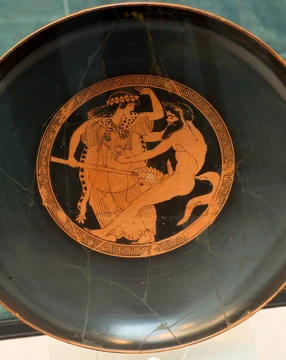
The Suppliants (Aeschylus)
Aeschylean tragedy where the chorus as protagonists flee forced marriage.

Blau-Barcelona · CC BY-SA 4.0
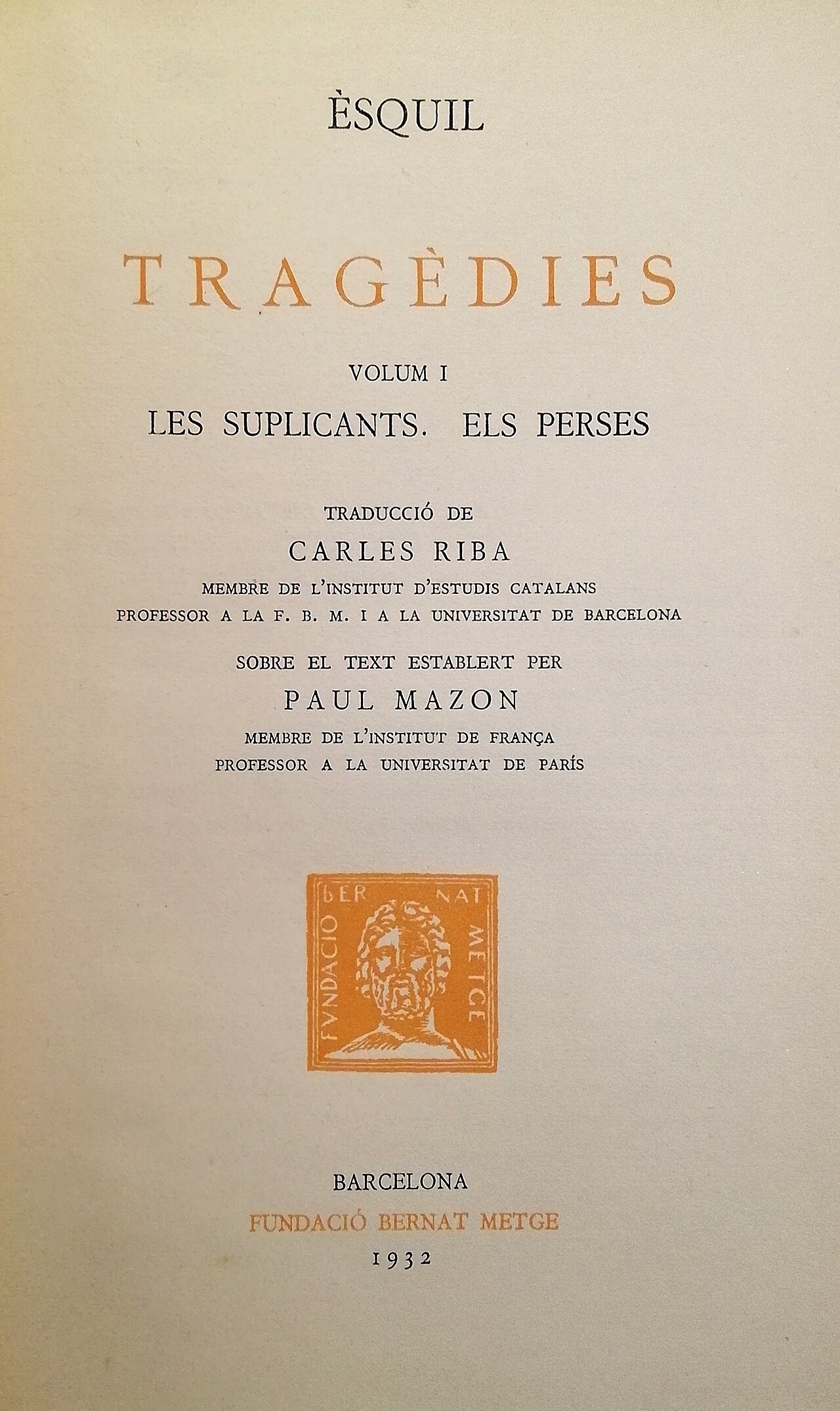
The Suppliants (Ancient Greek: Ἱκέτιδες, Hiketides; Latin: Supplices), also called The Suppliant Maidens, The Suppliant Women, or Supplices, is a play by Aeschylus. It is the first play in a tetralogy, sometimes called the Danaid Tetralogy, which likely included the lost plays The Egyptians, The Daughters of Danaus, and the satyr play Amymone. The play was long thought to be Aeschylus' earliest surviving work due to the anachronistic function of the chorus as protagonist, but mid-twentieth-century evidence shows it was one of his last plays, written after The Persians and possibly after Seven Against Thebes.
- Author
- Aeschylus
- Genre
- Greek tragedy
- Part of
- Danaid Tetralogy (with lost plays The Egyptians, The Daughters of Danaus, and satyr play Amymone)
- Protagonist
- The Danaids (the chorus)
- Setting
- Argos, at a sanctuary of several gods
Lore & Background
The Danaids form the chorus and serve as the protagonists. They flee a forced marriage to their Egyptian cousins. When they reach Argos from Egypt, they take refuge in a sanctuary of several gods outside the city and entreat King Pelasgus to protect them. The girls are descended from Zeus and Io, an Argive princess, so they claim Argos as their ancestral homeland. They tell Pelasgus that if he refuses their plea, they will commit suicide by hanging themselves on the statues of the gods. Pelasgus gives the decision to the Argive people, who unanimously decide in favor of the Danaids. Almost immediately, a herald of the Egyptians arrives to force the Danaids to return, but Pelasgus threatens the herald and urges the Danaids to remain within the walls of Argos. The play ends with the Danaids retreating into the Argive walls, protected.
Reader's Guide
The Suppliants is significant for its unique structure, where the chorus of Danaids acts as the protagonist, a feature that long led scholars to consider it an early play. However, mid-twentieth-century evidence revealed it was one of Aeschylus' last works, written after The Persians. The play explores themes of supplication, ethnic confrontation, and the tension between divine law and political necessity. Pelasgus faces a tragic dilemma: protecting the suppliants risks war with Egypt, while rejecting them offends Zeus and risks ritual pollution from the Danaids' threatened suicide. The play ends with a temporary reprieve, but the tetralogy continues with war, murder, and eventual resolution. Scholars have debated the tetralogy's meaning: George Thomson interpreted it as a defense of Athenian marriage laws requiring widows to marry next-of-kin, while others saw a conflict between matrilineal and patrilineal inheritance. Edith Hall notes the play's dramatization of violent ethnic confrontation, reflecting mid-fifth-century Greek interest in different Mediterranean peoples. The lost plays of the tetralogy are reconstructed from fragments, including a speech by Aphrodite praising marriage, and likely ended with the Danaids absolved of murder and married to Argive men.
Did You Know?
- The Suppliants was long thought to be Aeschylus' earliest surviving play due to the chorus acting as protagonist, but mid-twentieth-century evidence showed it was one of his last.
- The play is the first in the Danaid Tetralogy, which included the lost plays The Egyptians, The Daughters of Danaus, and the satyr play Amymone.
- The Danaids threaten to commit suicide by hanging themselves on the statues of the gods if their plea for protection is rejected.
- A fragment from the lost play The Danaids preserves a speech by Aphrodite praising the marriage between sky and earth.
Dating and the Mystery of Composition
For centuries, scholars assumed The Suppliants represented Aeschylus at the very start of his career. The reasoning seemed compelling: the chorus carries the entire dramatic weight as protagonist, and the play is saturated with choral lyric—successions of odes that critics have called among the densest, most opulent, and most purely lovely passages in all of Greek poetry. Such a structure felt archaic, a relic of an earlier theatrical mode. Yet evidence unearthed in the mid-twentieth century overturned this assumption. The Suppliants was actually one of Aeschylus's final works, composed after The Persians and possibly even after Seven Against Thebes. Its premiere likely took place only a few years before the Oresteia in 458 BC. The play also served as the opening piece of what scholars call the Danaid Tetralogy, a four-play cycle that included the now-lost The Egyptians, The Daughters of Danaus, and the satyr play Amymone. This repositioning fundamentally transformed how we understand the play's place within Aeschylus's mature artistic development.
Plot and the Architecture of Tragic Dilemma
The Danaids, fleeing a forced marriage to their Egyptian cousins, arrive in Argos and take shelter at a sanctuary of several gods outside the city. They entreat King Pelasgus for asylum, grounding their claim in ancestry: their lineage traces back through generations to Zeus and Io, an Argive princess whom Zeus seduced and whom Hera subsequently drove to Egypt. The stakes escalate when the girls warn that refusal will drive them to hang themselves on the very statues of the gods, bringing ritual pollution upon the city and provoking Zeus's wrath. Pelasgus, torn between the prospect of war with Egypt and the sacred obligation to protect suppliants, defers the decision to the Argive people, who unanimously decide in the Danaids' favour. Danaus rejoices and the chorus praises the Greek deities. But the relief is short-lived: an Egyptian herald arrives demanding their return, and Pelasgus must threaten the envoy and order the women to stay within the walls. The play closes with the Danaids retreating into Argos, safe for now—yet the tetralogy's subsequent plays promise that this reprieve is only temporary.
Thematic Interpretations and Cultural Resonance
Scholars have read The Suppliants through multiple interpretive lenses. George Thomson, building on D. S. Robertson, argued the tetralogy functioned as a defence of the Athenian law requiring widows to marry a brother or cousin of their late husband to keep property within the family. Under this reading, the Danaids' plight would not have struck the original audience as sympathetically as it does today, since cousin marriage was a familiar legal norm. Pelasgus's pointed question—asking who would oppose next-of-kin claiming legal mastery—mirrors that statute directly. Thomson further speculated the tetralogy's conclusion may have dramatized the founding of the Thesmophoria, a women's festival rooted in the cult of Demeter that Herodotus attributed to the Danaids' arrival from Egypt. Ridgeway offered a different frame, seeing the plays as a dramatization of the tension between matrilineal and patrilineal inheritance. Vernant and Vidal-Naquet proposed the Danaids objected to cousin marriage as incest, though that theory has since been discredited. Edith Hall emphasizes the play's psychological core as a depiction of violent ethnic confrontation, rich in comparisons of appearance, clothing, religion, and political culture that reflect mid-fifth-century Greek fascination with the diverse peoples of the Mediterranean.
The Lost Tetralogy and Its Reconstructed Aftermath
Only The Suppliants survives from the Danaid Tetralogy. The other three plays—The Egyptians (also known as Aigyptioi), The Daughters of Danaus (or The Danaids), and the satyr play Amymone—have been lost to time, though a single significant passage from The Danaids endures: a speech by Aphrodite celebrating the marriage of sky as groom and earth as bride, from which rain falls to nourish cattle, corn, and fruit. The general plot of the lost plays has been reconstructed. Following a war between Argos and Egypt in which Pelasgus is killed, Danaus becomes tyrant of Argos. He forces the marriage upon his daughters but instructs them to murder their husbands on their wedding night. All comply except Hypermnestra, whose husband Lynceus escapes. Danaus imprisons or threatens Hypermnestra for her disobedience, but Lynceus returns, kills Danaus, and assumes the throne of Argos with Hypermnestra as his queen. Scholars disagree on precise details of the ending, though Aphrodite's involvement in the denouement seems certain.
Gallery


Frequently Asked Questions
Who are the main characters in The Suppliants?
The protagonists are the Danaids themselves, who function as the chorus rather than as individual speaking roles. This makes the play unusual in the Greek tragic tradition, where the chorus normally supports the action instead of driving it.
What tetralogy does The Suppliants belong to?
It opened a four-play cycle scholars call the Danaid Tetralogy, which also included The Egyptians, The Daughters of Danaus, and the satyr play Amymone. Of those four works, only The Suppliants has survived intact to the present day.
Where is The Suppliants set?
The action unfolds in Argos at a shared sanctuary dedicated to several deities. That sacred location is central to the drama because the Danaids invoke the gods' protection to shield them from the pursuing Egyptian suitors.
Why is The Suppliants considered important in the history of Greek drama?
It ranks among the oldest surviving Greek tragedies and is notable for making the chorus the central dramatic force rather than a supporting element. The play also foregrounds themes of asylum, divine law, and the tension between personal desire and sacred obligation.
More in Plays & Drama 1-18
Spotted an error? Know more?
This is a living reference — every entry is fact-audited, and reader corrections feed straight into our audit queue. Suggest an edit · See this site's audit record