Julius Caesar (play)
Shakespeare's tragedy of political conspiracy and civil war in Rome.

William Shakespeare · Public domain
The play portrays the political conspiracy that led to the assassination of the Roman dictator Julius Caesar and Rome's subsequent civil war. Although named after Caesar, the play focuses largely on Brutus, whose moral and political dilemmas have often led critics to regard him as its tragic hero.
- Author
- William Shakespeare
- Genre
- Historical tragedy
- Setting
- Ancient Rome
- Main source
- Thomas North's translation of Plutarch's Lives
Lore & Background
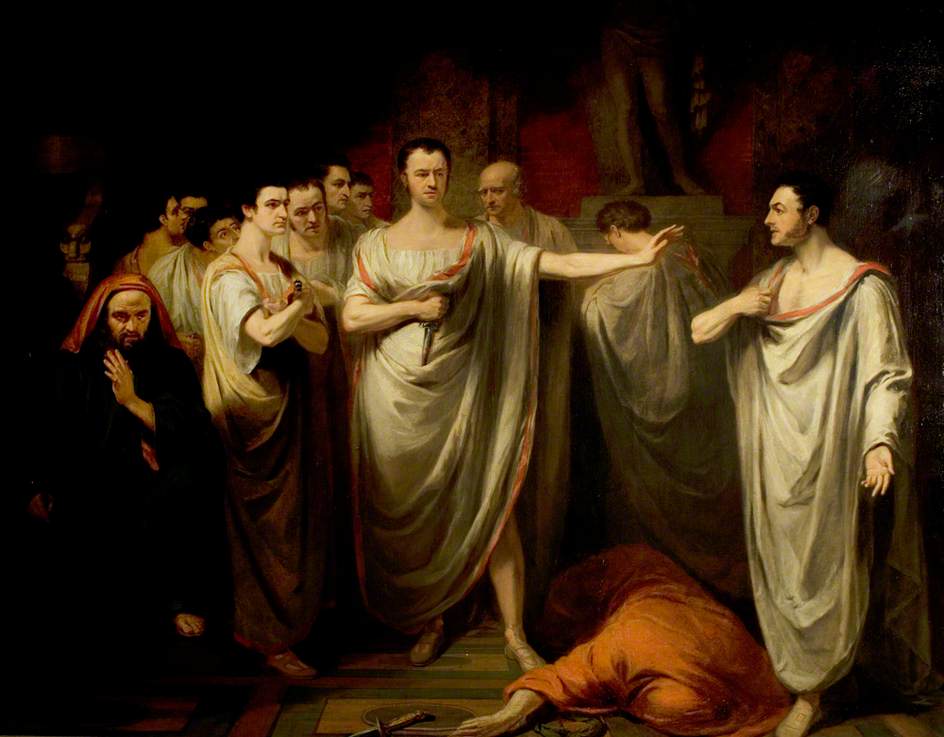
The play opens with tribunes Flavius and Marullus discovering commoners celebrating Julius Caesar's return from defeating the sons of Pompey. During the feast of Lupercal, a soothsayer warns Caesar to 'Beware the ides of March,' which he ignores. Cassius attempts to convince Brutus to join a conspiracy to kill Caesar, and after reading forged letters of support from the Roman people, Brutus decides to join. Caesar goes to the Senate despite his wife Calpurnia's premonitions, where the conspirators stab him; Brutus is last, and Caesar says 'Et tu, Brute?' before dying. Brutus delivers an oration defending the assassination, but Antony's speech over Caesar's corpse turns public opinion against the conspirators, rousing the mob to drive them from Rome. Amid the violence, an innocent poet named Cinna is killed by the mob.
Reader's Guide
Julius Caesar was among the first plays performed at the Globe Theatre and has remained one of Shakespeare's most frequently staged works. Central themes include the tension between personal loyalty and public duty, the use of rhetoric in politics, and the fragility of republican governance in the face of ambition and power. The play has been adapted in numerous forms and interpreted in diverse political contexts, reflecting concerns from Elizabethan debates on succession to modern discussions of dictatorship and democracy. It is widely studied for its exploration of character, persuasion, and political morality, and continues to influence literature, theater, and political discourse. Shakespeare deviated from historical facts to curtail time and compress events for heightened dramatic effect, such as placing Caesar's triumph on Lupercalia and combining the two Battles of Philippi.
Did You Know?
- The play was among the first performed at the Globe Theatre.
- Shakespeare combined the two Battles of Philippi, though historically there was a 20-day interval between them.
- The phrase 'Et tu, Brute?' was not devised by Shakespeare but appears in earlier Elizabethan works.
- The play contains anachronistic elements from the Elizabethan era, such as characters mentioning doublets.
Plot & Dramatic Arc
The play traces the political conspiracy against Caesar through to the civil war that follows. It opens with tribunes Flavius and Marullus confronting commoners celebrating Caesar's victory over Pompey's sons. At the Lupercal feast, a soothsayer warns Caesar to beware the ides of March, which he dismisses. Cassius works to recruit Brutus, who is hesitant but ultimately agrees after seeing forged letters of popular support. On the ides of March, the conspirators stab Caesar under the pretense of a petition; Brutus strikes last, and Caesar's final words are "Then fall, Caesar!" The conspirators remain at the scene, and Brutus delivers a rational oration to the crowd. Antony then delivers his famous speech over Caesar's body, manipulating public emotion and turning the mob against the assassins. The mob burns the conspirators' homes and kills an innocent poet mistaken for a conspirator. The play culminates at the Battle of Philippi, where Cassius has his servant kill him, Titinius commits suicide, and Brutus runs himself through on his sword. Antony closes by calling Brutus "the noblest Roman of them all."
Thematic Core & the Question of Brutus
Although the play bears Caesar's name, critics widely regard Brutus as its true tragic hero. His moral and political dilemmas—weighing personal loyalty against public duty—drive the dramatic tension throughout. The play interrogates the fragility of republican governance when confronted with ambition and concentrated power. Rhetoric emerges as a central mechanism: Brutus appeals to reason and principle, while Antony deploys emotional manipulation, demonstrating how persuasion can override logic in political life. The tension between private affection and civic responsibility runs through every major character. Caesar's refusal of the crown at Lupercal, his sympathy for the poor, and his will leaving 75 drachmas to every citizen all complicate the conspirators' justification. The play ultimately asks whether killing a man for the good of the state can ever be truly noble, and whether the act of regicide inevitably corrupts those who commit it.
Sources, Craft & Dramatic Structure
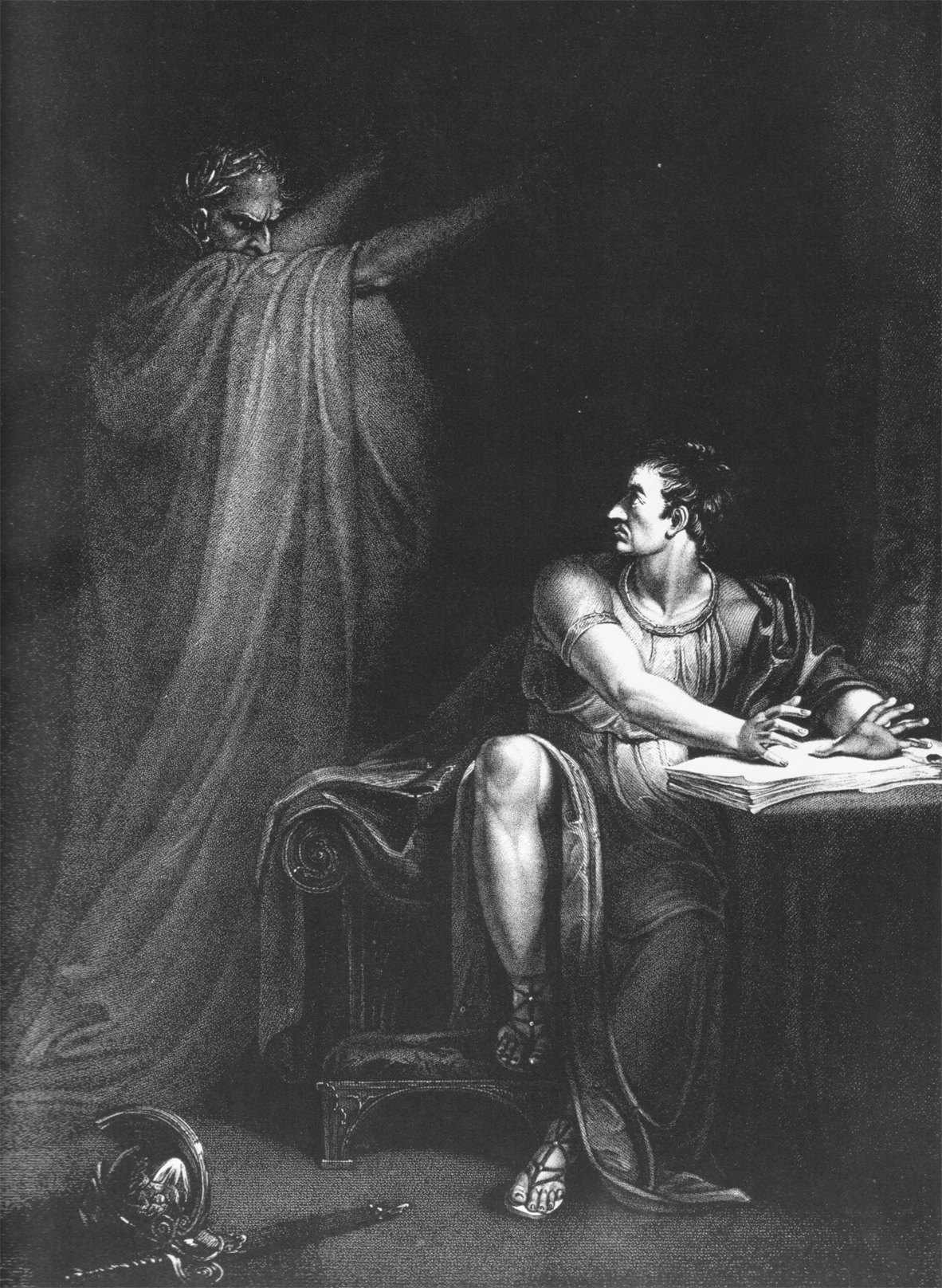
Shakespeare drew his primary material from Sir Thomas North's 1579 English translation of Plutarch's Parallel Lives, though he introduced deviations in various aspects of the narrative. The First Folio title reads "The Tragedie of Ivlivs Cæsar," and the work is classified as a historical tragedy, believed to have been written and first performed in 1599. Shakespeare transformed a biographical and historical account into a tightly structured dramatic arc, compressing events and reshaping character motivations for theatrical impact. The play moves from public spectacle—the Lupercal parade, the Senate assassination—to intimate moral crisis, such as Brutus's soliloquies and the ghost's warning, and back to public violence in the mob's fury and the Battle of Philippi. The inclusion of the soothsayer, Calpurnia's premonitions, and Caesar's ghost introduces a supernatural layer absent from Plutarch, deepening the tragic atmosphere. The final scene's brief hint at friction between Antony and Octavius connects the play to Shakespeare's later Roman work, Antony and Cleopatra.
Legacy, Staging & Political Resonance
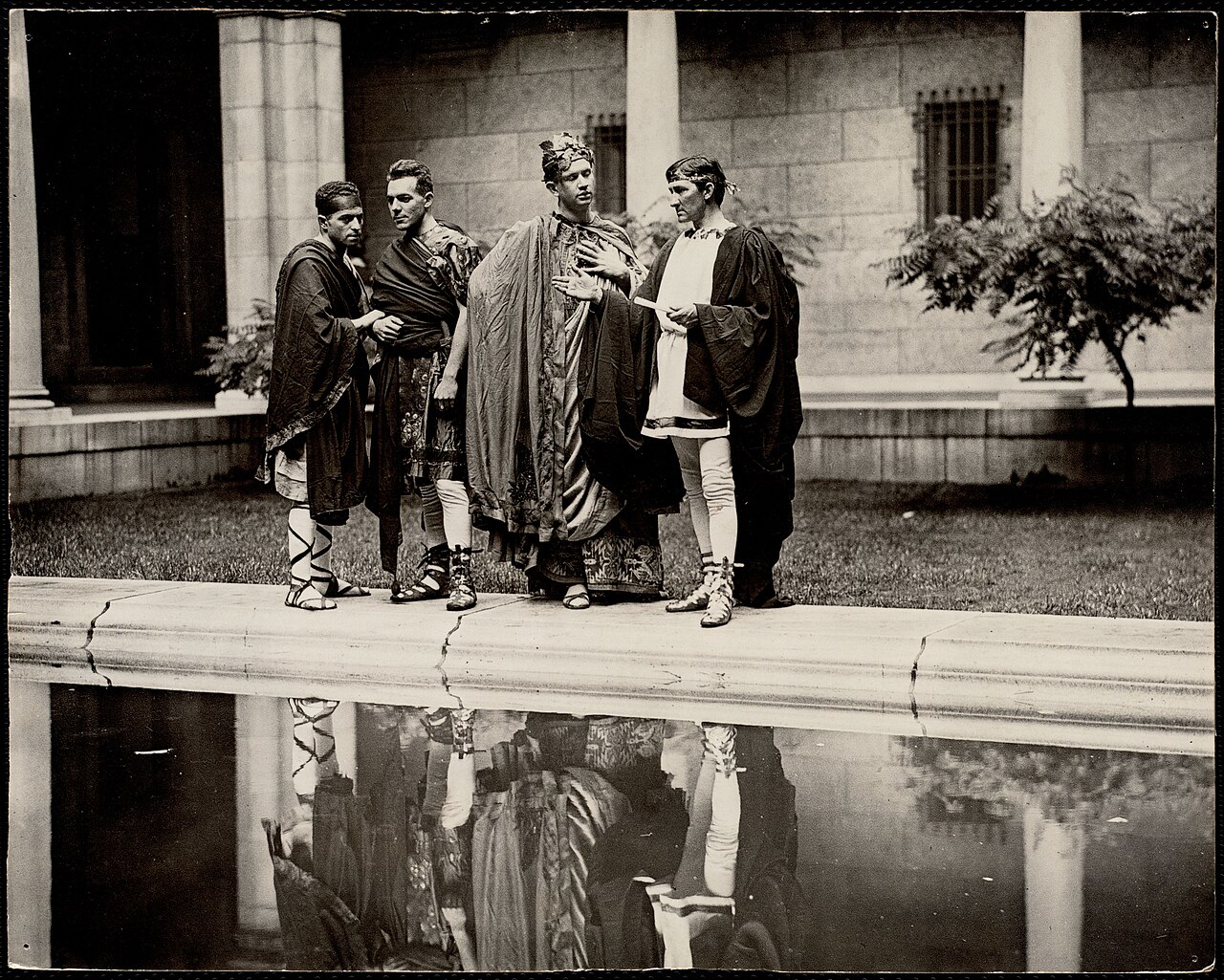
Julius Caesar was among the first plays performed at the Globe Theatre and has remained one of Shakespeare's most frequently staged works. Its themes resonate across centuries: from Elizabethan debates over succession and the nature of legitimate rule to modern discussions of dictatorship versus democracy. The play has been adapted in numerous forms and interpreted in diverse political contexts, making it a persistent touchstone in political discourse. It is widely studied for its exploration of character, persuasion, and political morality, and it continues to influence literature, theater, and public debate. The contrast between Brutus's rational appeal and Antony's emotional manipulation has made the play a perennial case study in rhetoric and propaganda. Its ending, with Antony's tribute to Brutus as "the noblest Roman of them all," leaves audiences with an unresolved moral question about whether idealistic violence can ever serve the public good, ensuring the play's relevance in every era that grapples with power, loyalty, and the limits of republican governance.
Gallery

Frequently Asked Questions
What is the central plot of Julius Caesar (play)?
The drama follows a group of Roman senators, led by Cassius and Brutus, who conspire to assassinate the dictator Julius Caesar. Their act of murder triggers a civil war that ultimately destroys the conspirators themselves.
How does the story of Julius Caesar (play) end?
The conspirators are defeated in battle at Philippi by the combined forces of Mark Antony and Octavius. Brutus, rather than face capture, takes his own life, sealing the failure of the assassination plot.
Why is Julius Caesar (play) considered important in the canon of drama?
It is one of Shakespeare's earliest forays into classical history and remains a foundational text for exploring themes of political power, loyalty, and the consequences of betrayal. Its depiction of a republic torn apart by internal conflict continues to resonate in discussions of governance and public rhetoric.
More in Plays & Drama 1-18
Spotted an error? Know more?
This is a living reference — every entry is fact-audited, and reader corrections feed straight into our audit queue. Suggest an edit · See this site's audit record