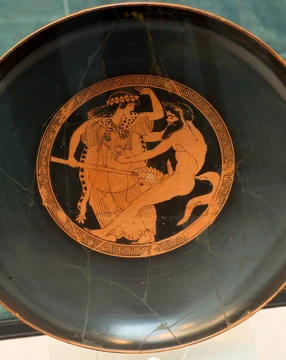
The Taming of the Shrew
A comedy of courtship and the taming of a shrew.

Miami U. Libraries - Digital Collections · No restrictions
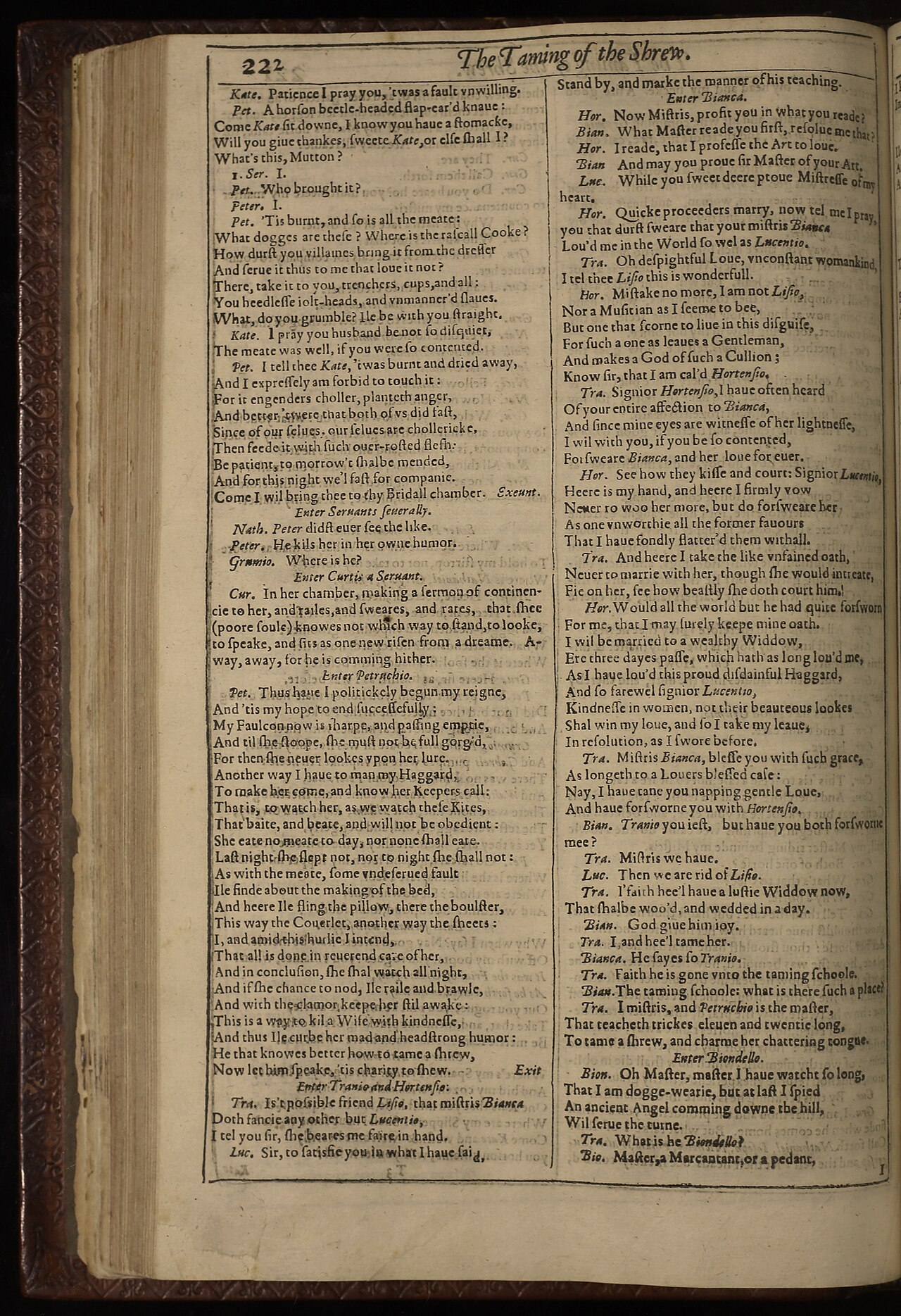
The play begins with a framing device, often referred to as the induction, in which a mischievous nobleman tricks a drunken tinker named Christopher Sly into believing he is actually a nobleman himself. The main plot depicts the courtship of Petruchio and Katherina, the headstrong, obdurate shrew, and the subplot features a competition among the suitors of Katherina's younger sister, Bianca.
- Author
- William Shakespeare
- Genre
- Comedy
- Setting
- Padua and Verona
- Main characters
- Petruchio, Katherina, Bianca, Lucentio, Baptista Minola
- Framing device
- Induction with Christopher Sly
- Controversy
- Whether the play is misogynistic
Lore & Background
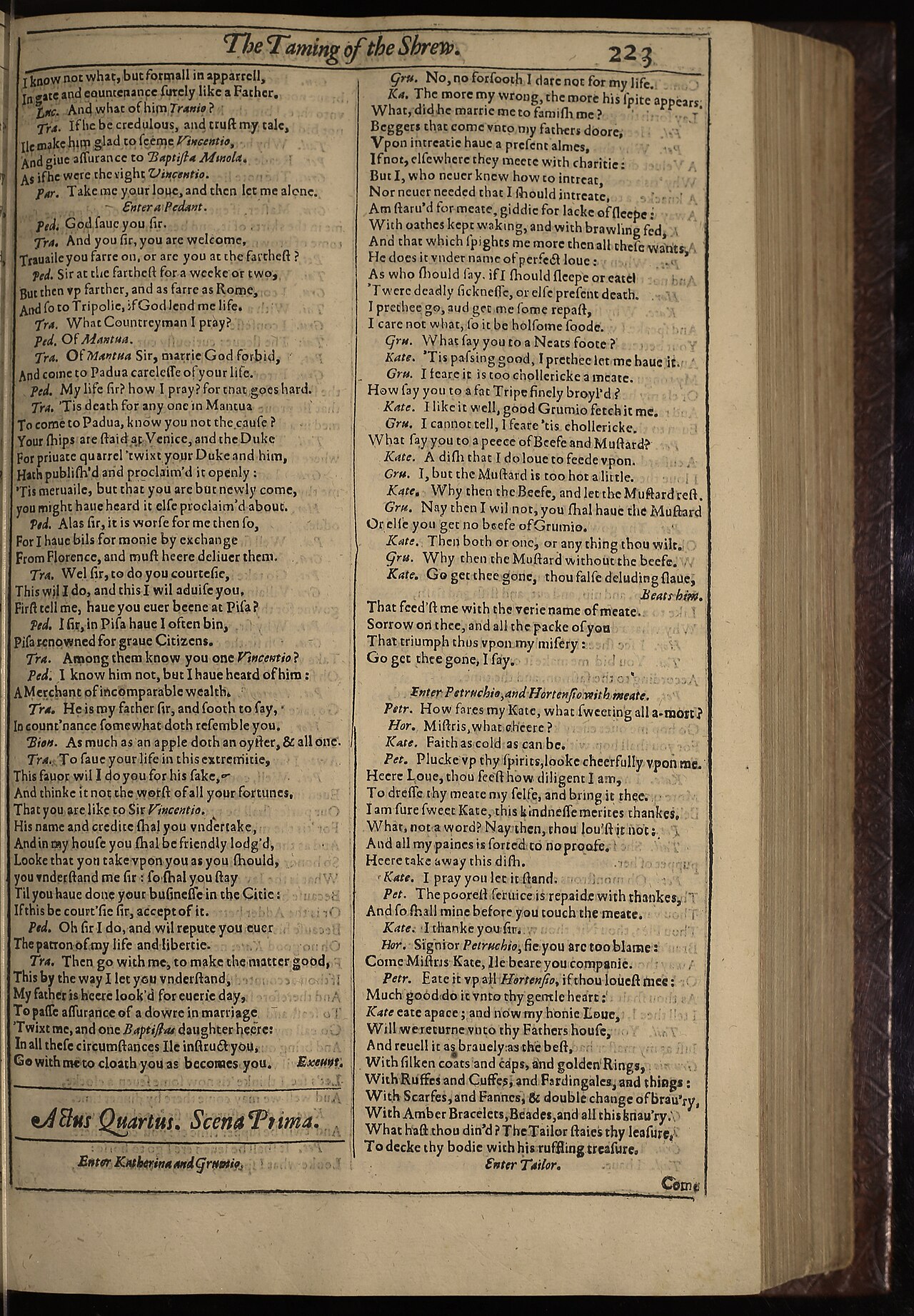
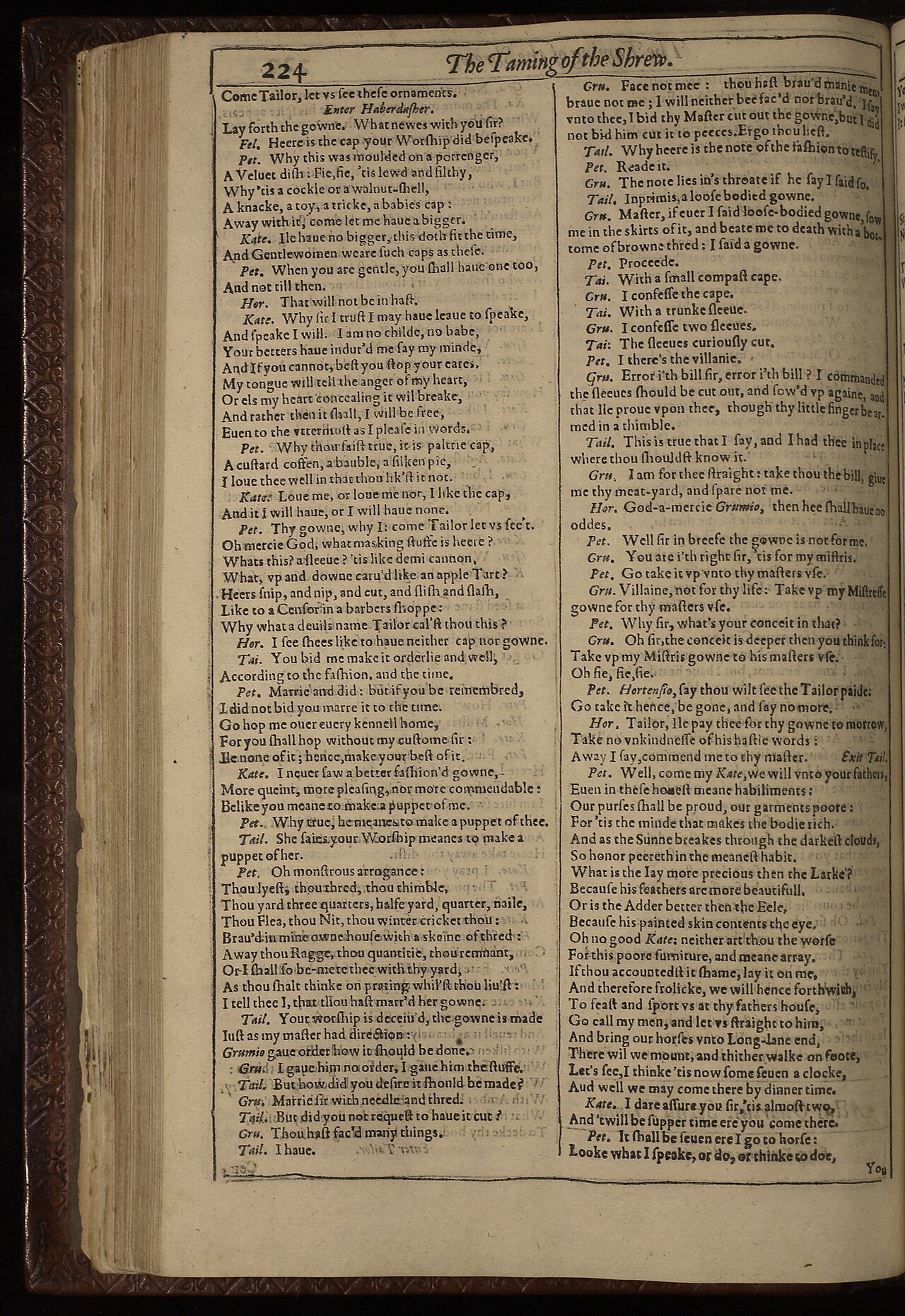
The play's induction frames it as a 'kind of history' performed for a drunken tinker, Christopher Sly, who is tricked into believing he is a lord. In the play, the 'shrew' is Katherina, the elder daughter of Baptista Minola. Petruchio, arriving from Verona, courts and marries Katherina, then 'tames' her by refusing her food and clothing and forcing her to agree with everything he says. The subplot involves Lucentio and Hortensio disguising themselves as tutors to woo Bianca, while Tranio impersonates Lucentio.
Reader's Guide
The Taming of the Shrew has been adapted numerous times for stage, screen, opera, ballet, and musical theatre. The question of whether the play is misogynistic has become the subject of considerable controversy. Its sources include the tale of a commoner duped into believing he is a lord, found in Arabian Nights and a story by Pontus de Huyter, and the basic narrative of a headstrong woman tamed by a man, present in numerous traditions including Chaucer's Canterbury Tales and folklore.
Did You Know?
- The play begins with a framing device in which a nobleman tricks a drunken tinker named Christopher Sly into believing he is a nobleman.
- Petruchio 'tames' Katherina by keeping her from eating and drinking and forcing her to agree with everything he says.
- The 1999 high-school comedy film 10 Things I Hate About You is loosely based on the play.
- The tale of a commoner being duped into believing he is a lord is recorded in Arabian Nights.
The Induction: A Play Within a Play
Shakespeare composed this comedy sometime between 1590 and 1592, and it opens with a theatrical conceit that sets the entire production apart. Before the main story unfolds, a mischievous nobleman spots a drunken tinker named Christopher Sly and orchestrates an elaborate prank. Sly is tricked into believing he has been elevated to the rank of a lord, and the nobleman arranges for a full performance to entertain his bewildered new guest. The play-within-a-play is presented to Sly as a kind of history, and his supposed wife turns out to be nothing more than a servant named Bartholomew dressed in women's clothing. This framing device accomplishes several things simultaneously: it gives the audience a layered theatrical experience, it establishes a tone of playful deception that echoes the disguises later in the main plot, and it positions the entire story as entertainment staged for a confused outsider. The induction thus becomes a mirror for the larger themes of performance, identity, and manipulation that run throughout the comedy.
Petruchio's Method and the Question of Misogyny
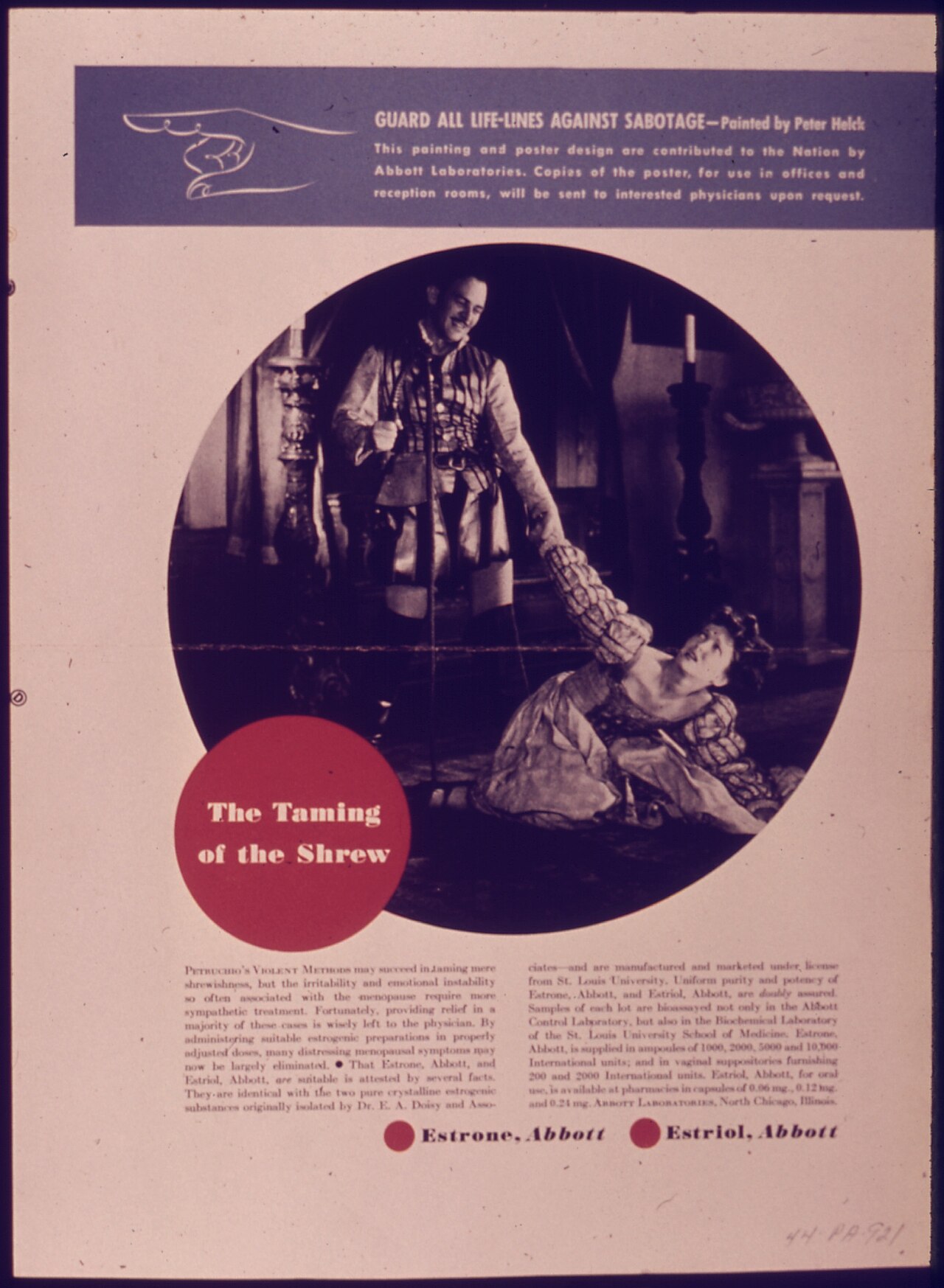
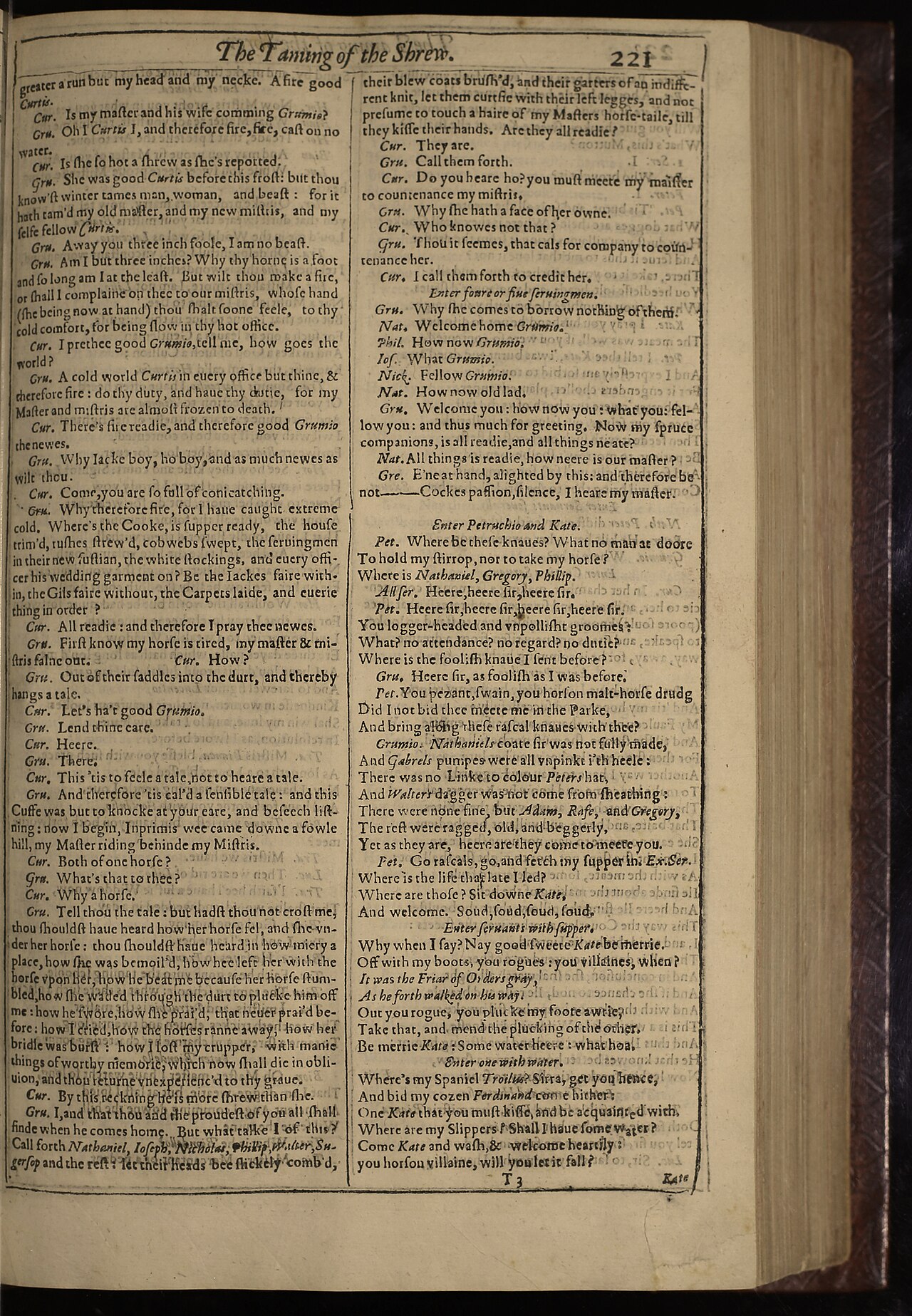
The heart of the play revolves around the courtship between Petruchio and Katherina, the elder daughter of Baptista Minola in Padua. Katherina is described as headstrong and obdurate, and she enters the relationship as a deeply unwilling participant. Petruchio's strategy for taming her involves a sustained campaign of psychological and physical torment. In Verona, he refuses her food and clothing by declaring that perfectly cooked meat is overdone, that a beautiful dress does not fit properly, and that a stylish hat is out of fashion. He also contradicts every statement she makes, forcing her to capitulate to his absurd assertions. On the journey back to Padua, she concedes that the sun is the moon and vows that if he calls it a rush-candle, it shall be so for her. She even agrees that a passing stranger is a woman before apologizing when told he is a man. By the final scene, she has become a compliant and obedient bride. Yet this transformation has made the question of whether the play endorses misogyny a subject of considerable and enduring controversy.
Disguises, Dowries, and the Bianca Subplot
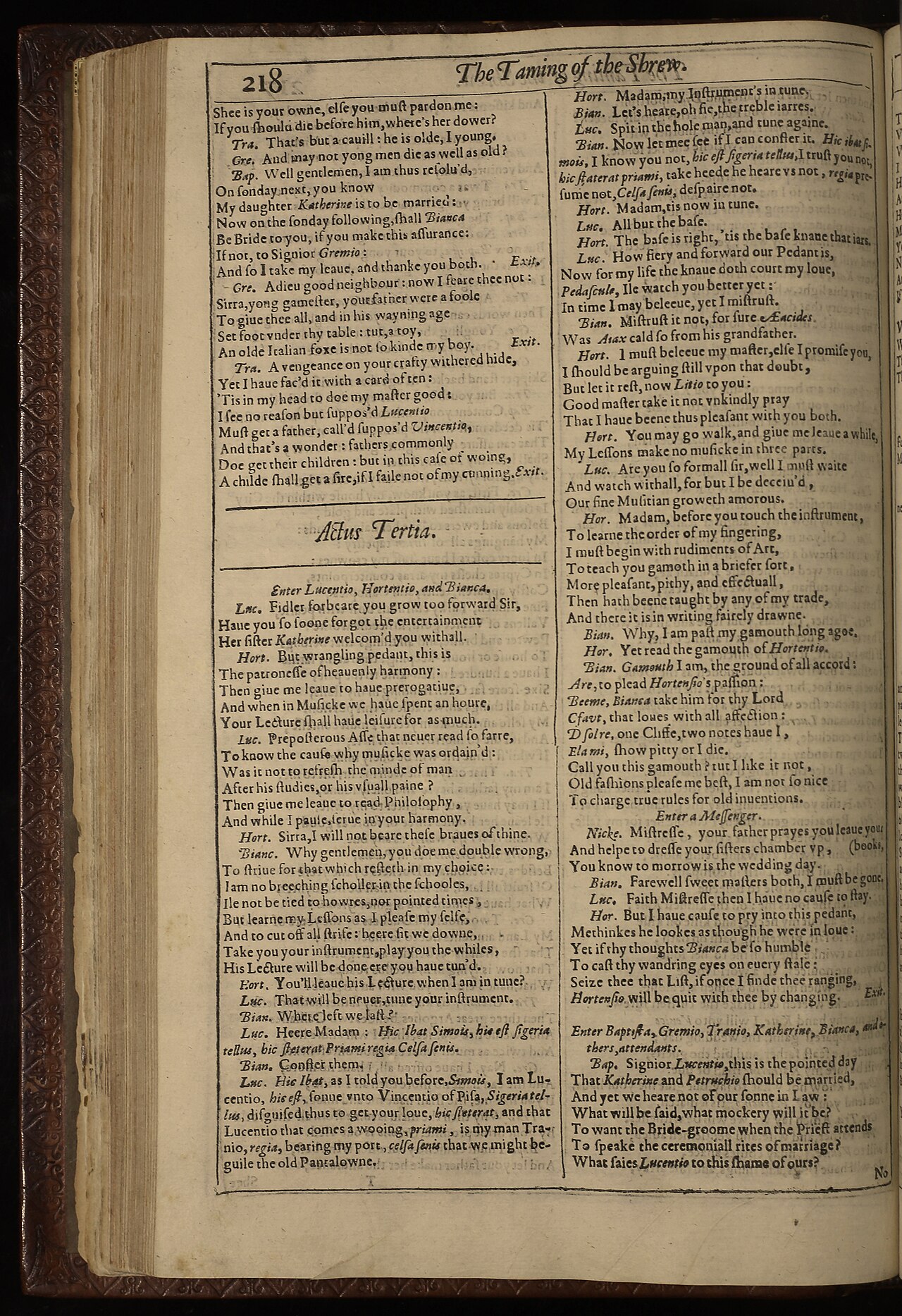
Running parallel to the central taming narrative is a tangled web of romantic scheming centered on Katherina's younger sister Bianca, whom the other characters regard as the ideal woman. Baptista has sworn that Bianca cannot marry until her elder sister finds a husband, a condition that drives the suitors to cooperate in securing Petruchio for Katherina. Lucentio, a young man who has just arrived in Padua to attend university, falls for Bianca and devises an elaborate ruse: he disguises himself as a Latin tutor named Cambio to court her behind his father's back, while his servant Tranio takes on his identity. Hortensio similarly hides behind the alias of a music tutor called Litio. When Tranio, posing as Lucentio, outbids Gremio for Bianca's hand, he overpromises a dowry that Lucentio cannot actually deliver. The solution involves convincing a passing pedant to impersonate Vincentio, Lucentio's father, to confirm the payment. Bianca, aware of the deception, secretly elopes with the real Lucentio. The resulting cascade of mistaken identities and revelations ultimately unravels in a scene of bewildered forgiveness.
A Play That Refuses to Stay Still: Adaptations and Legacy
Few Shakespeare comedies have been reimagined as frequently or as diversely as The Taming of the Shrew. The story has been transplanted into opera, ballet, musical theatre, and countless stage and screen productions. Among the most celebrated adaptations is Cole Porter's musical Kiss Me, Kate, which reworks the romantic rivalry into a new theatrical format. The 1963 Western comedy McLintock! brought the taming dynamic to the screen with John Wayne and Maureen O'Hara in the lead roles, while the 1967 film version starred the legendary pairing of Elizabeth Taylor and Richard Burton. More recent reinterpretations include the 1999 high-school comedy 10 Things I Hate About You, which recasts the shrew as a teenage girl navigating a modern social hierarchy, and the 2003 romantic comedy Deliver Us from Eva. Each of these works has recontextualized the original's central question of whether the play is misogynistic within the cultural assumptions of its own era, ensuring that the play's controversies remain as alive as they were in the early 1590s.
Gallery
Frequently Asked Questions
What is The Taming of the Shrew about?
The play follows Petruchio's determined courtship of Katherina, a fiery and stubborn young woman, while a subplot tracks the romantic rivalry among suitors vying for her more docile sister Bianca. At its core, it is a comedy of marriage and power dynamics centered on the 'taming' of a shrew.
What is the induction in The Taming of the Shrew?
The induction is a brief framing scene in which a mischievous nobleman pranks a drunk tinker named Christopher Sly, convincing him he is actually a lord. This prologue wraps around the main story and gives the audience a 'play within a play' structure.
Who are the main characters in The Taming of the Shrew?
The central figures are Petruchio, the suitor set on winning Katherina, and Katherina herself, the headstrong elder daughter of Baptista Minola. Other key players include Bianca (Katherina's younger sister), Lucentio (Bianca's love interest), and their father Baptista.
More in Plays & Drama 1-18
Spotted an error? Know more?
This is a living reference — every entry is fact-audited, and reader corrections feed straight into our audit queue. Suggest an edit · See this site's audit record