Henry V (play)
Shakespeare's play about King Henry V and the Battle of Agincourt.

Photo taken by Cowardly Lion · Public domain
- Author
- William Shakespeare
- Genre
- History play
- Main Character
- King Henry V of England
- Notable Event
- Battle of Agincourt
Lore & Background
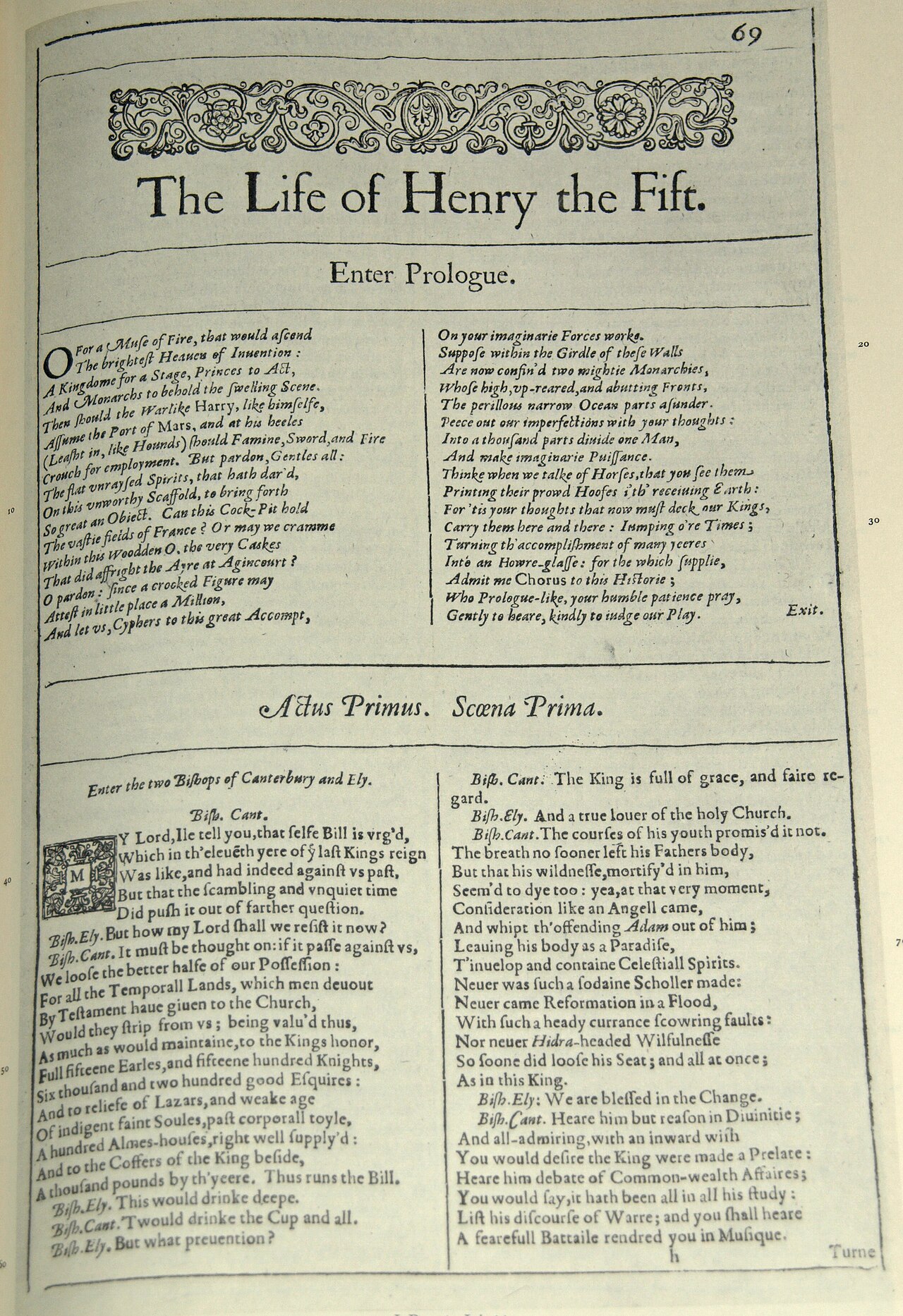
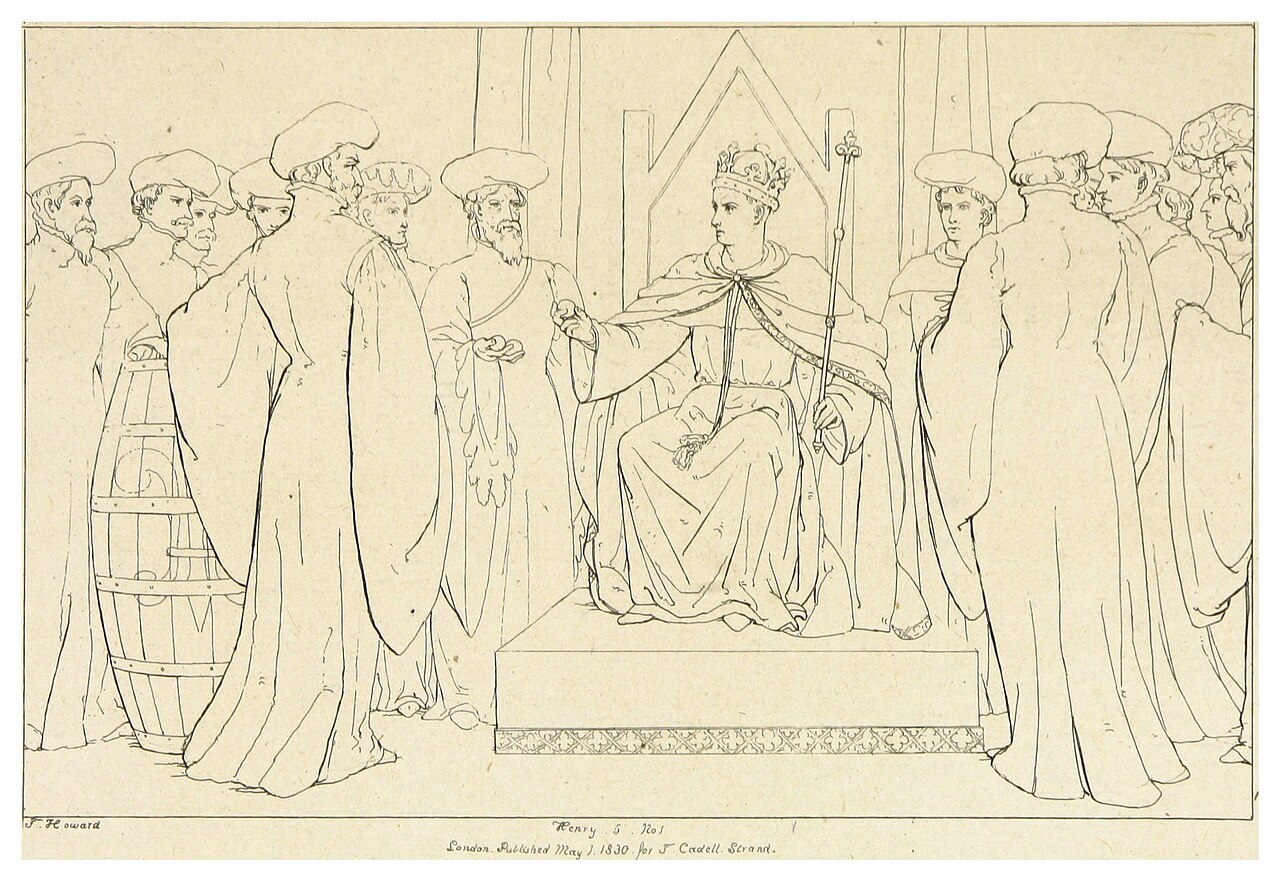
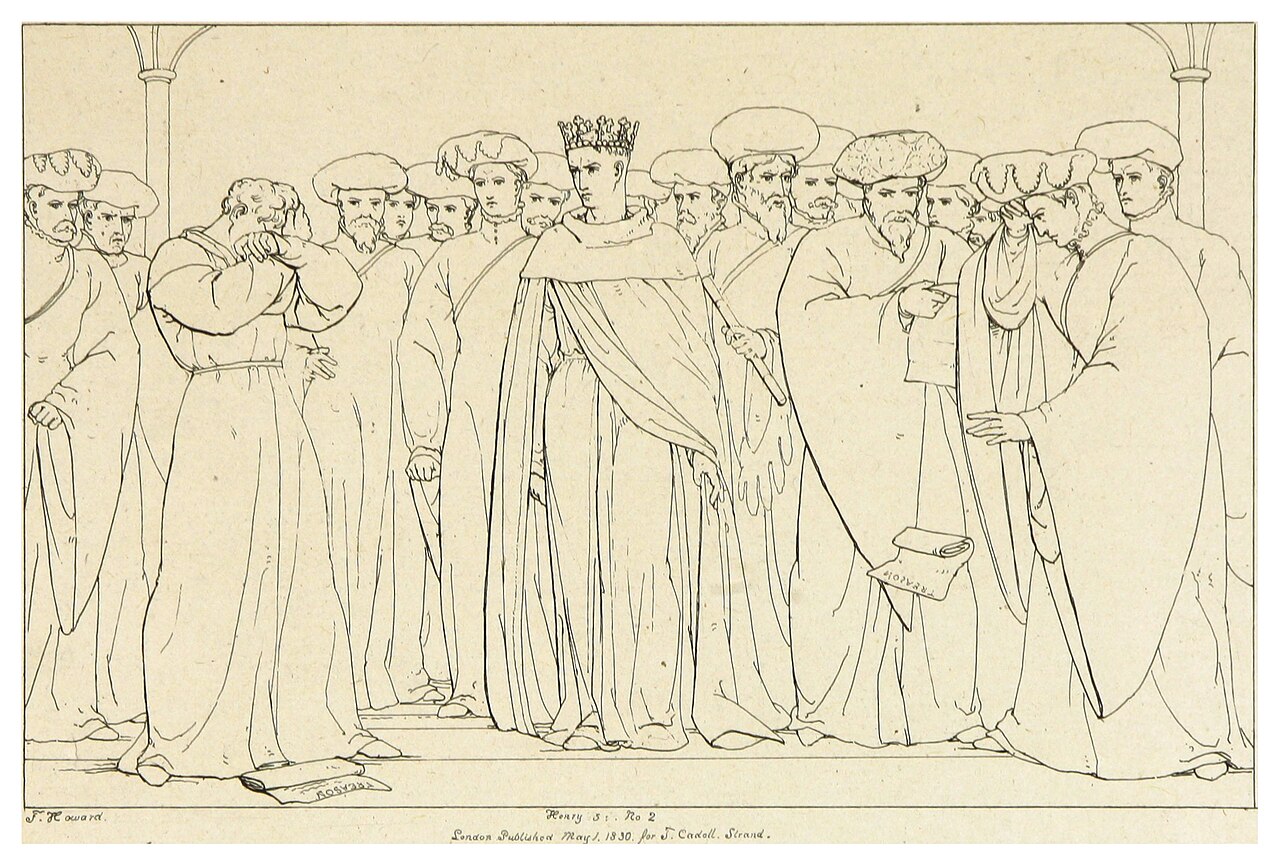
The play is the final part of a tetralogy, preceded by Richard II, Henry IV, Part 1, and Henry IV, Part 2. Original audiences would have been familiar with the title character from the Henry IV plays, where he was depicted as a wild, undisciplined young man. In Henry V, the young prince has matured and embarks on an expedition to France. The play opens with a Chorus apologizing for the limitations of the theatre and encouraging the audience to use their 'imaginary forces' to overcome them. Act I deals with Henry's decision to invade France, claiming rightful heirship to the French throne, to which the French Dauphin responds with an insulting gift of tennis balls. Act II focuses on a plot to assassinate Henry at Southampton, which he uncovers and punishes ruthlessly. In Act III, Henry and his troops besiege Harfleur, and after a hard-won battle, they take the port. Act IV depicts the night before the Battle of Agincourt, where Henry wanders in disguise among his soldiers and delivers the famous St Crispin's Day Speech. Act V shows Henry wooing Princess Katharine of France and the negotiation of the Treaty of Troyes, with the French king adopting Henry as heir to the throne. The play concludes with the Chorus foreshadowing Henry's death and the tumultuous reign of his son Henry VI.
Reader's Guide
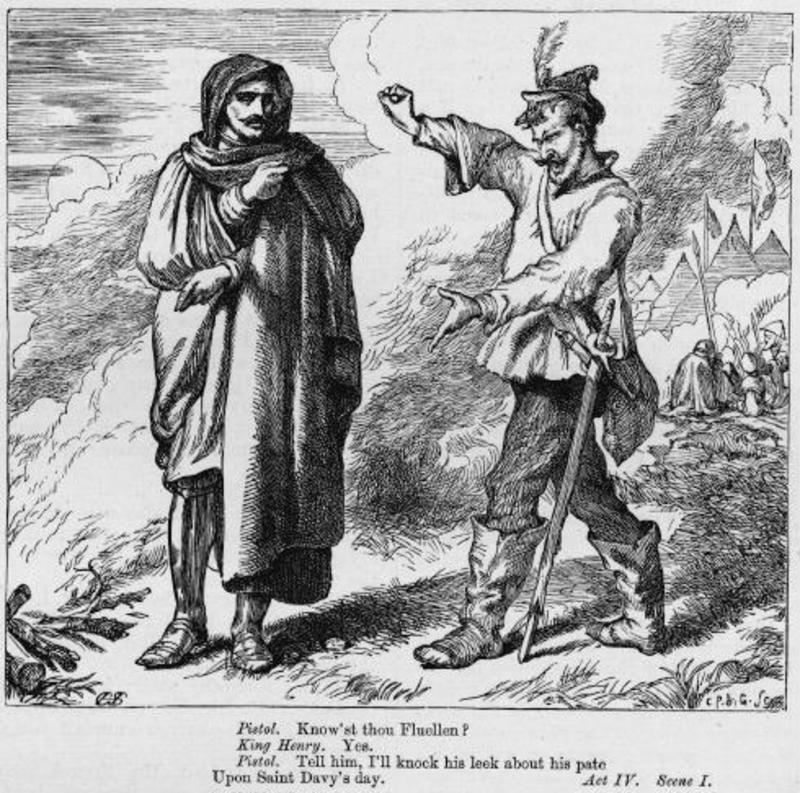
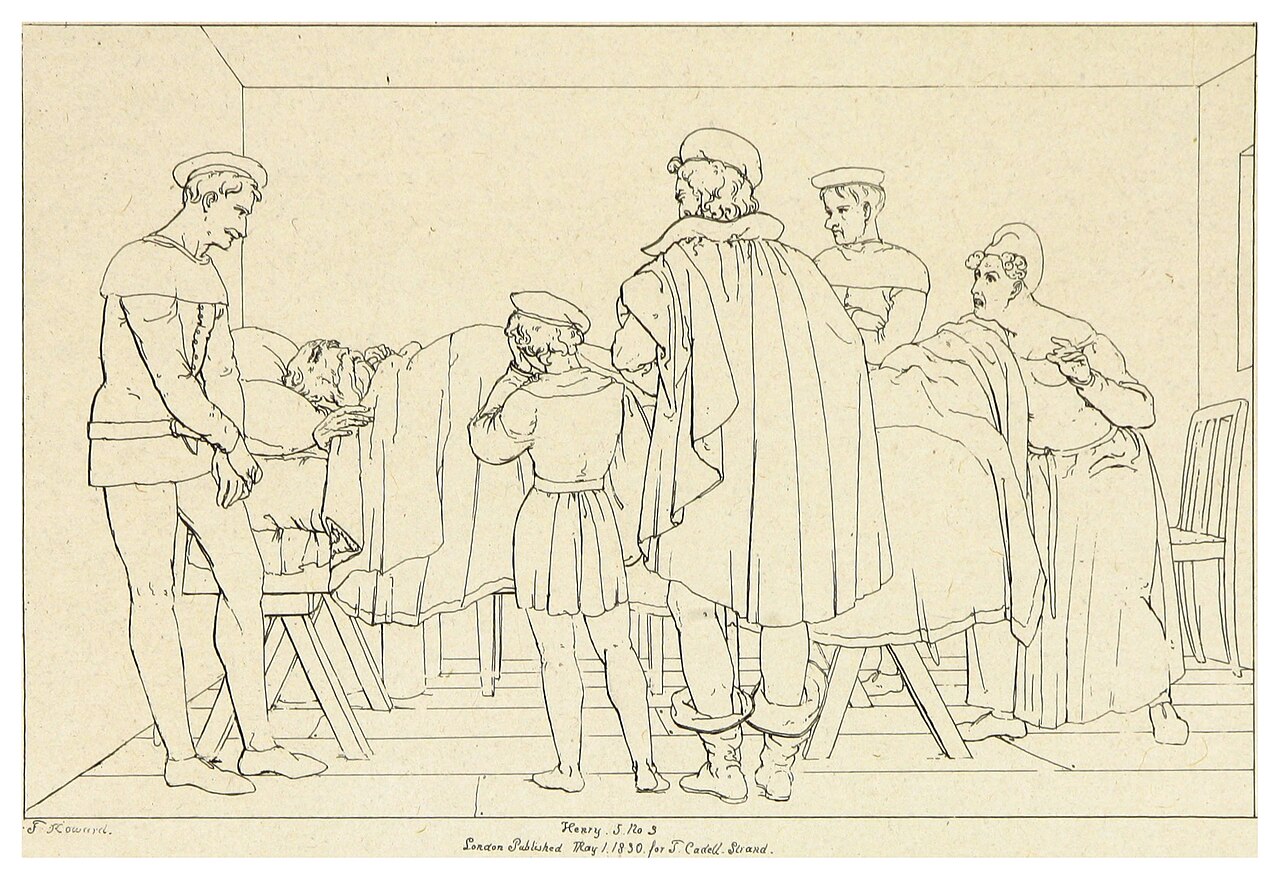
Henry V is significant as a complex exploration of warfare, leadership, and national identity. Shakespeare's primary source was Raphael Holinshed's Chronicles, with additional consultation of Edward Hall's work and likely familiarity with Samuel Daniel's poem. The play's attitude to warfare has been interpreted in multiple ways: it seems to celebrate Henry's invasion and military prowess, but also comments on the moral and personal cost of war. The American critic Norman Rabkin described the play as a picture with two meanings, never settling on one viewpoint. The play includes minor comic characters—Pistol, Nym, and Bardolph—who contrast with and comment on the main plot, with Bardolph executed for looting. The play also deals briefly with the death of Sir John Falstaff.
Did You Know?
- The play is the final part of a tetralogy that includes Richard II, Henry IV, Part 1, and Henry IV, Part 2.
- The French Dauphin responds to Henry's claims with an insulting gift of tennis balls.
- The play does not directly describe the Battle of Agincourt; the outcome is revealed by the herald Montjoy.
Dionysian Roots and the Birth of a Form
The satyr play's deepest roots stretch back to rural Greek celebrations honoring Dionysus, a deity Rush Rehm describes as embodying a fundamental paradox—simultaneously life-giving and potentially destructive. These early festivities marked the agricultural cycle of planting and harvest, and from them, performance culture gradually crystallized. The form's codification is most often credited to Pratinas of Phlius, who around 500 BC likely adapted the dithyramb tradition of his native region, with its chorus of satyrs, to complement the newly invented Athenian tragedy. His son Aristias, Choerilus, and Aeschylus all further developed the genre. Brockett suggests the satyr play may actually predate both tragedy and comedy as the earliest dramatic form, while A. E. Haigh viewed it as a survival from the primitive period of Bacchic worship. By the fifth century, P. E. Easterling notes, the satyr play was regarded as an indispensable component of the tragike didaskalia. The mythological satyrs themselves likely began as minor nature deities, with their leader Silenus originating as a water spirit, and Eric Csapo and Margaret C. Miller identify them as archetypal musicians and dancers, tying them directly to Dionysiac processions.
A Bridge Between Tragedy and Comedy
The satyr play occupies a unique structural position in Greek theatre, drawing simultaneously from both tragedy and comedy. It was composed exclusively by tragedians and staged at the Dionysian festival as the final performance following a trilogy of tragedies, making it the closing act of Athens' most prestigious annual cultural event. Mark Griffith emphasizes that it was widely accepted as the most satisfying conclusion to this complex competition. Its mythological-heroic subject matter and elevated language style align it closely with tragedy, yet its plots, titles, thematic concerns, character types, and—crucially—its happy endings mirror the conventions of comedy. At the City Dionysia, each competing tragedian was required to submit three tragedies alongside a satyr play, which served as the last piece in the festival program. Aeschylus, for instance, won first prize in 472 BC with a tetralogy that included his satyr play Prometheus, while Euripides presented works such as Theristae in 431 BC and Sisyphus in 415 BC. This dual inheritance made the satyr play a distinctive hybrid, neither purely solemn nor purely comic, but a deliberate synthesis honoring the full spectrum of dramatic expression.
The Chorus of Satyrs: Voice, Costume, and Transgression
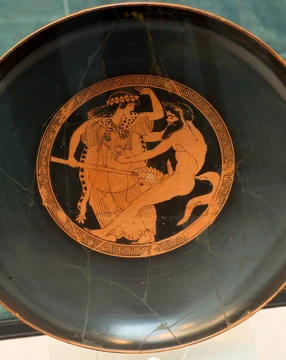
The most visually and linguistically striking feature of the satyr play is its chorus of satyrs, whose very presence on stage set the genre apart from both tragedy and comedy. Their costumes, rooted in Bacchic tradition, placed emphatic focus on the phallus, and the earliest reliable visual evidence comes from the Pandora Vase, dating to the middle of the fifth century BC. The satyrs' spoken language was deliberately transgressive: it employed wordplay, sexual innuendo, and explicit references to breasts, flatulence, erections, and other bodily functions that would never appear in a tragedy. This linguistic freedom reflected the satyrs' mythological character—they were defined by amorality, excessive drinking, and the deliberate dismantling of social norms and barriers. Their leader, Silenus, had originally been a water spirit and maker of springs before being proclaimed their father. The chorus members wore masks in accordance with Bacchic custom, and their combined effect created a performance space where the boundaries of decorum were intentionally dissolved, offering audiences a cathartic release that complemented the gravitas of the tragedies preceding them.
Fragments, Survival, and Lasting Influence
The satyr play's physical survival is remarkably thin. The sole complete text to reach modern readers is Euripides' Cyclops, dramatizing Odysseus's confrontation with the one-eyed giant Polyphemus from Book 9 of the Odyssey. Among Aeschylus's satyr plays, the largest surviving fragment is Dictyulci, in which the infant Perseus and his mother Danae are found by Silenus and the satyrs on a shore. Sophocles left behind substantial fragments of Ichneutae, where the satyrs are tasked by Apollo with tracking his stolen cattle and ultimately discovering the baby Hermes. Even a fragment of music from a satyr play endures. The genre continued to be written and performed as late as the second century AD, and evidence from vase paintings fills gaps in the literary record. Around the mid-fourth century, the Great Dionysia shifted away from competitive formats, and satyr plays moved outside the festival proper. In the 430s, after Morychides restricted fighting-related stage activity, satyr plays and comedies gained renewed prominence. The form also left a clear imprint on Middle Comedy, which adopted the satyr play's tendency to humble and domesticate gods and heroes, and its influence extended well into the Hellenistic and Roman periods.
Gallery
Frequently Asked Questions
Who is the central figure in Henry V?
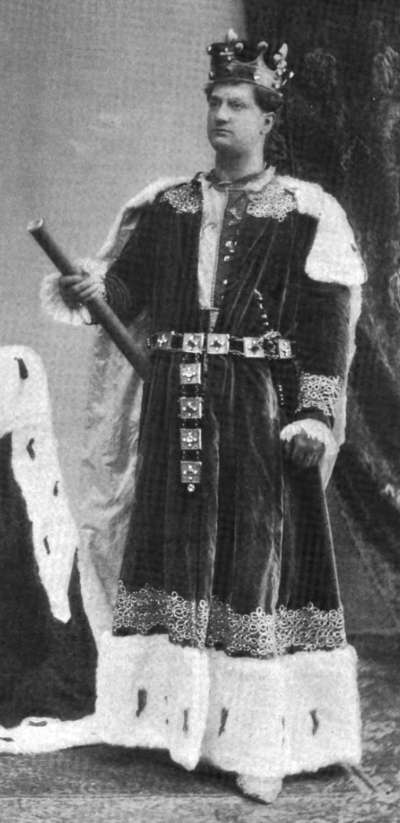
King Henry V of England anchors the play, portrayed as a seasoned, unifying monarch who rallies his subjects and commands an outnumbered army to a stunning victory over the French.
Why do fans and scholars consider Henry V important?
The play is frequently cited for its stirring patriotic speeches and its nuanced portrait of kingship, making it one of Shakespeare's most frequently performed and studied history dramas.
More in Plays & Drama 1-18
Spotted an error? Know more?
This is a living reference — every entry is fact-audited, and reader corrections feed straight into our audit queue. Suggest an edit · See this site's audit record